Being a Leader and the Effective Exercise of Leadership
An Ontological / Phenomenological Model
This course in developmental production is a collaborative work between Werner Erhard, Professor Michael C. Jensen, Steve Zaffron, and Professor Jeri Echeverria (and past contributors Allan Scherr and Kari Granger).
The course is a leadership laboratory where instructors work with the participants to create direct access to the ways of being, thinking, planning, and action required to be a leader and to exercise leadership effectively – in any situation, and no matter the circumstances.
This leadership course has been in development since it was first delivered in 2004 at the University of Rochester Simon School of Business, USA (where it was delivered yearly through 2008) to MBA, PhD, and Executive Development Program students, faculty, administrators, alumni and outside corporate executives. It has been taught in the curriculum at the United States Air Force Academy from 2008 to 2011 (where a version of the course continues to be taught); at Erasmus Academie Rotterdam, NL, in June 2009 (a version of which was taught at the Erasmus University Law School in 2009 and 2010); at Texas A&M University Mays School of Business, USA, in June 2010; in India under the auspices of the IC Centre for Governance and MW Corp in November 2010; at the School of Medicine at Dartmouth, USA; at entrepreneurship@UBC, University of British Columbia in Vancouver, BC, Canada in 2013;
at Nanyang Technological University in Singapore in July 2014; at the Zayed University Convention Center in Dubai in January 2015, at Clemson University, College of Business, USA in July 2016, and at the University of California, Los Angeles, USA in 2018 and 2019.
The leadership course has also been delivered in Whistler, B.C. Canada in October 2012; in Cancun, Mexico in October 2013, December 2015, November 2017, November 2018 and November 2019; in Bermuda in November 2014; and in Abu Dhabi U.A.E in October 2016 to benefit the Erhard-Jensen Ontological / Phenomenological Initiative which supports the delivery of the course in Universities throughout the world.
Under the sponsorship of the Kauffman Foundation, the U.S. Air Force Academy, and the Erhard-Jensen Ontological / Phenomenological Initiative, more than 140 scholars and faculty members from around the world have been provided with training in delivering the course (in 2010 at the U.S. Air Force Academy in Colorado, USA, and delivered annually since 2013 in North America including at Rutgers University, and the University of California at Los Angeles). In addition, 250 senior management consultants from 66 international consulting firms have been trained in delivering this course for their clients.
The content and the learning/teaching method employed in this course is based on a new ontological / phenomenological model of leader and leadership. Rather than studying and trying to emulate the characteristics, styles, and actions of noteworthy leaders or to communicate knowledge about leader and leadership, this new model of leadership has been specifically designed to provide participants with direct access to being a leader and to the effective exercise of leadership. An epistemological mastery of a subject leaves you knowing. An ontological / phenomenological mastery of a subject leaves you being.
The course employs a unique contextual framework (structure for analysis) that distinguishes what leader and leadership are, and does so in a way that creates direct access to being a leader and the effective exercise of leadership. This specification of what leader and leadership actually are is also intended to contribute to the foundation for a true science of leadership. As a consequence of this contextual framework, the central role that the future plays in being a leader and the effective exercise of leadership are made clear, and how one kind of future constrains one and the people one is leading, and another kind of future frees one and the people one is leading for breakthrough results.
Course participants are provided with a new and powerful model of integrity; it is demonstrated that integrity as it exists in this new model is the foundation on which leadership is built. Participants discover that integrity, as it exists in this new model, is a necessary condition for maximum individual, group, and organizational performance.
The course makes clear the difference between management and leadership, the difference between the exercise of authority or decision rights and the exercise of leadership, and the difference between being in a “leadership position” and actually being a leader. It highlights the fact that being a leader and exercising leadership effectively does not require one to have authority or even to be in a “leadership position”.
The pedagogical method employed is “transformational learning". In transformational learning we seek to become aware of our context of interpretations and beliefs, and to be critically reflective of our underlying assumptions. In transformational learning, our prevailing worldview and frames of reference (which are almost always invisible to ourselves) are uncovered thereby enabling us to reconstruct them such that more clarity and power is available to us.
Quoting Warren Bennis (2002) and Joseph Rost (1993) who conclude respectively:
“It is almost a cliché of the leadership literature that a single definition of leadership is lacking.” (Bennis,p.2)
and
“The scholars do not know what it is they are studying, and the practitioners do not know what it is they are practicing.” (Rost, p.8)
“…authors have tended to confuse their readers with contradictory conceptual frameworks, their theories and models have not added up to any meaningful conclusion about the nature of leadership.” (Rost, p.180)
Links:
Being A Leader And The Effective Exercise Of Leadership: An Ontological / Phenomenological Model, University of California Los Angeles, USA, July 2018 and July 2019
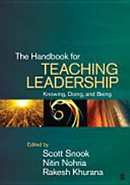
Creating Leaders: An Ontological/Phenomenological Model, Chapter 16 in The Handbook for Teaching Leadership: Knowing, Doing, and Being, edited by Harvard Business School's Scott Snook (Senior Lecturer), Nitin Nohria (Dean of Harvard Business School), and Rakesh Khurana (Dean of Harvard College and Marvin Bower Professor of Leadership Development), Sage Publications, 2012.
University of Rochester Simon Business School: Creating Leaders: A New Model - Ten Years On, Sands Leadership Lecture Series with Werner Erhard and Michael C. Jensen, February 5, 2014
Creating Leaders: A New Model 11 Years On: This presentation reviews the history of the leadership course created at the Simon Business School in the years 2004-2008. The first presentation of this material took place at the Simon Business School's “Sands Lecture” on February 5, 2014, and later at the Simon School NYC Conference - “The Global Marketplace: Rising To the Challenges of Regulation, Disruption and International Competition”, May 8, 2014, Grand Hyatt Hotel, New York City.
Creating Leaders, a New Model: An Evening with Werner Erhard and Professor Michael Jensen, New York University Skirball Center, November 5, 2013, University of Chicago Mandel Hall, May 3, 2015 and University of California, Berkeley Zellerbach Hall, May 13, 2015
The Four Ways of Being that Create the Foundation for Great Leadership, a Great Organization, & a Great Personal Life - Insigniam Quarterly
An Ontological/Phenomenological Model of Leadership, Uchenna Baker, Rutgers University; Graduate School – Newark, New Jersey - This study documents the possibilities that emerge when participants engage in an ontological leadership course that invites them to create futures that call for their leadership. This study postulates that the implementation of an ontological model in the classroom can be one key contribution to the development of students and educators and the reformation of American education. When educators and students are invited to examine who we are being as leaders in the classroom and the world, we are then better equipped to engage as citizens and agents of change. Collectively, we can renovate education and empower individuals from all walks of life who may then inform and create the future of American education and society.
Creating Leaders: A New Model, Presentation at NYU
Leadership and Leadership Development: An Ontological Approach - Michael C. Jensen, Harvard Business School
Introduction to Being a Leader and the Effective Exercise of Leadership: An Ontological / Phenomenological Model - slide presentation, Social Sciences Research Network
Harvard Business School, Working Knowledge - Creating Leaders: An Ontological / Phenomenological Model
Harvard Business School, Working Knowledge - Being a Leader and the Effective Exercise of Leadership: An Ontological / Phenomenological Model (PDF File of PowerPoint Slides)
Harvard Business School, Working Knowledge: CREATING LEADERS WORKSHOP: Mastering the Principles and Effective Delivery of 'The Ontological Leadership Course' (PDF File of PowerPoint Slides)
Harvard Business School, Working Knowledge - Introductory Reading For Being a Leader and The Effective Exercise of Leadership: An Ontological / Phenomenological Model
Being a Leader and the Effective Exercise of Leadership: An Ontological / Phenomenological Model - Course materials at Social Sciences Research Network
Michael C. Jensen delivering the Commencement Address - McDonough School of Business, Georgetown University, on Integrity, Authenticity and Being Committed To Something Bigger than Yourself
The paper “The Four Ways of Being that Create the Foundation for Great Leadership, a Great Organization, and a Great Personal Life”, originally given at Michael C. Jensen's commencement speech at McDonough School of Business, Georgetown University Commencement Ceremonies, May 21, 2011
Simon School Leadership Seminar Series - with Michael C. Jensen
Michael C. Jensen, Current Research, Harvard Business School - Leadership and Leadership Development: An Ontological Approach
Erasmus University - announcing Leadership Course via YouTube (English)
Harvard Business School, Working Knowledge - Creating Leaders: An Ontological / Phenomenological Model - Forthcoming Book Chapter
Michael C. Jensen Ph.D. - Leadership and Leadership Development: An Ontological Approach
Four Ways of Being that Create the Foundations of A Great Personal Life, Great Leadership and A Great Organization
The Four Foundations of Great Leadership: An Interview with US economist and Harvard Business School Professor, Michael C. Jensen.
Werner Erhard on Being a Leader and the Effective Exercise of Leadership:
An Ontological/Phenomenological Model
The Hidden Power of Integrity and Access to Vast Increases in Performance Michael C. Jensen's presentation at University of British Columbia prior to the Leadership Course which was delivered at entrepreneurship@UBC in June, 2013.
Creating Leaders: An Ontological / Phenomenological Model
Harvard Business School Professor Bill George:
What Does It Take To Be A Leader And For Leadership To Show Up?
Global Leadership Is Desperately Missing. It's Costing Us Our Future. Can we transform our crisis of leadership? - Gordon Starr
Werner Erhard on The Leadership Course - Video
Werner Erhard, Leadership Course
Two Major Movements in the Field of Leadership
Creating Leaders: A Pilot Pre/Post Evaluation of an Ontological/Phenomenological Model
The Handbook For Teaching Leadership, Sage Publications
Werner Erhard Discusses Being A Leader and The Effective Exercise of Leadership (Video)
Being A Leader and The Effective Exercise of Leadership (Videos on Youtube)
The Erhard-Jensen Ontological / Phenomenological Initiative: The purpose of The Erhard-Jensen Ontological / Phenomenological Initiative is to stimulate and support research into the development and application of the ontological / phenomenological laws of human nature and human behavior to the lives of individuals and human entities to reliably and significantly elevate human performance and quality of life. This includes all areas of living across the entire spectrum of human activity.
Erhard-Jensen Ontological / Phenomenological Initiative and The Leadership Course: The Initiative’s primary focus is the Leadership Course. Over 45 faculty members from around the world, supported by the Initiative, are delivering the full Course or versions of the Course in their respective institutions.
Creating Leaders: A Pilot Pre/Post Evaluation of an Ontological/Phenomenological Model; Journal of Leadership Education; DOI:10.1 2806/V15/I4/R4,
Volume 15
Issue 4
Research 50
Academic Papers and Research about the course Being A Leader and Effective Exercise of Leadership: The Ontological / Phenomenological Model: "This study documents the possibilities that emerge when participants engage in an ontological leadership course that invites them to create futures that call for their leadership."
Participant Comments about the course, Being a Leader and the Effective Exercise of Leadership: An Ontological / Phenomenological Model.
Creating Course Leaders Program (CCL): The Creating Course Leaders Program is designed to support faculty members in higher education in gaining mastery in the delivery of the course: Being a Leader and the Effective Exercise of Leadership: An Ontological / Phenomenological Model.
References:
Warren Bennis, 2007, Introduction to the Special Issue “The Challenges of Leadership in the Modern World”, American Psychologist
Rost, Joseph C., 1993, Leadership for the Twenty-First Century. Westport, CT: Praeger.
Jack Mezirow and Associates, 2000, Learning as Transformation: Critical Perspectives on a Theory in Progress: Jossey-Bass Inc.
|